BACKEND / SYSTEM DESIGN / INFRASTRUCTURE
Al Marbatt
The system behind an equestrian platform.
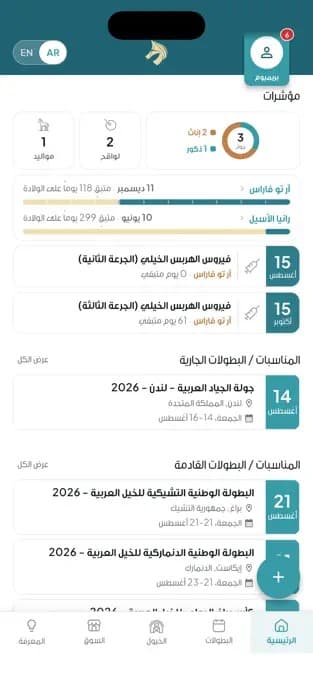
A bilingual production platform for Arabian horse owners, farms, and show organisers. I designed, built, and operated the backend, from the domain model and authorization rules to background workflows and its Kubernetes infrastructure.
- RESPONSIBILITY
- Sole backend engineer · AWS infrastructure & delivery
- CONTEXT
- Saudi Arabia · English & Arabic · 2024–2026
01 / CONTEXT
One platform, several connected domains.
The platform brings together horse pedigrees, health and breeding records, farm management, competitions, listings, and subscriptions. These domains share ownership and identity rules: a horse may belong to a farm, staff may act on that farm’s behalf, and access may depend on a subscription.
My responsibility was to make those relationships explicit in the backend and keep the same rules working across mobile, web, administration, and automated jobs. English and Arabic were part of the data and notification design, rather than a presentation-only concern.
- Owned API architecture, PostgreSQL modeling, business rules, integrations, and operational tooling.
- Provisioned AWS infrastructure in Terraform and built the EKS delivery and monitoring workflows.
- Supported the system through dependency upgrades, security reviews, data maintenance, and recovery procedures.
02 / ARCHITECTURE
A modular monolith with explicit boundaries.
Feature modules separate routes, controllers, services, and repositories. Services own domain rules and cross-module workflows; repositories encapsulate Prisma access. This keeps business behavior out of the HTTP handlers and database-access code.
Interface-based service contracts provide test seams and allow dependencies to be replaced. Request validation, centralized errors, and language middleware handle shared concerns consistently.
Request path through the application
- ENTRY
- Routes & middlewareAuthentication · permissions · validation · language
Validated request - HTTP
- ControllersTranslate HTTP input and output
Application operation - DOMAIN
- ServicesBusiness rules · interface contracts · orchestration
Repository contract - PERSISTENCE
- Repositories → PrismaQueries · projections · persistence
Relational storage - DATA
- PostgreSQLDomain records and relationships
04 / DATA
Model relationships once; reuse them across workflows.
PostgreSQL represents users, farms and stables, horse lineage, breeding and health records, and championship results. An operation-user association connects staff to a business with granular permissions. A horse references its sire and dam, allowing the same ancestor to participate in multiple pedigrees.
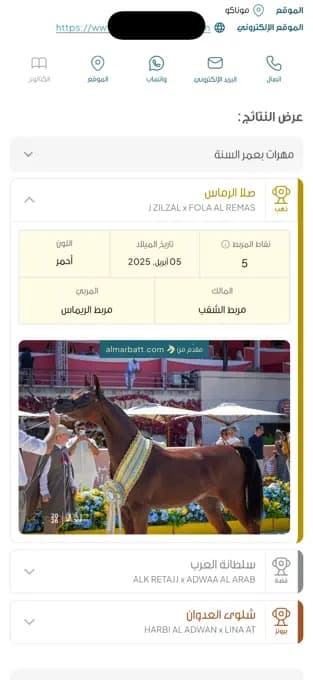
The gallery uses a virtual aggregation layer to combine profile media, achievements, and championship images without duplicating storage. Results retain source identifiers and read-only flags so writes remain scoped to the originating record.
- User ↔ OperationUser ↔ Business: delegated business access with explicit permissions.
- Horse → sire / dam: self-referencing ancestry rather than copied pedigree records.
- Horse → breeding, health, vaccination, and achievement records: lifecycle history tied to the same identity.
- Event → Championship → Result: competition data feeds configurable points and rankings.
- Redis caches selected read-heavy endpoints with explicit invalidation on writes; aggregate queries use parallel reads and selected fields.
05 / AUTOMATION
Domain events for immediate work. Schedules for time-based work.
Health automation distinguishes a state change from the passage of time. Confirming breeding generates gestation vaccination reminders. Successful foaling schedules weaning reminders for the foal. New horses receive age-based vaccination schedules.
In-process scheduled jobs handle breeding status progression, routine health reminders, and subscription expiry. A manual-run CLI lets operations invoke jobs on demand. These are application listeners and scheduled workers, not a separate distributed event bus.
Breeding and notification workflow
- DOMAIN EVENT
- Breeding confirmedGenerate vaccination reminders
- Foaling successfulSchedule weaning reminders
Persist scheduled reminders - TIME-BASED WORK
- Reminder schedulersDue reminders · farm intervals · user preferences
Localized notification request - DELIVERY
- Shared notification servicePush · SMS · email · in-app inbox
06 / PEDIGREE
AI-assisted import with validation at the boundary.
Pedigrees arrive as registry pages and chart images. The import service fetches and normalizes registry content with Puppeteer and JSDOM, then asks Claude to extract structured ancestry. Uploaded image types are identified from their bytes rather than trusted client metadata.
The extracted result is checked against the application schema before persistence. Enum values are validated, and existing ancestors are linked instead of duplicated. The model performs extraction inside a controlled import workflow.
Pedigree import pipeline
- INPUT
- Registry page or chart imageNormalize pages · inspect image MIME bytes
Normalized content - EXTRACTION
- Claude text / visionStructured horse and three-generation lineage
Candidate records - VALIDATION
- Schema checks & ancestor matchingValidate enums · resolve existing horses
Validated relationships - PERSISTENCE
- PostgreSQLUpsert records and link pedigree relationships
07 / INFRASTRUCTURE
An EKS platform with managed data services.
Terraform provisions the VPC, EKS cluster and managed node group, RDS PostgreSQL, ElastiCache Redis, and supporting AWS services. The network separates public and private subnets, with PostgreSQL in private subnets and Redis access scoped to the cluster.
The Node.js Helm chart runs two replicas with resource limits and startup, liveness, and readiness probes. Containers run as non-root with capabilities dropped. ingress-nginx handles routing, cert-manager manages TLS certificates, and application secrets are supplied through Kubernetes Secrets.
Production infrastructure — logical topology
- CLIENTS
- Mobile, web & administrationHTTPS requests
Public ingress - ROUTING
- ingress-nginx + cert-managerRouting · TLS certificates
Application traffic - EKS
- Node.js applicationTwo replicas · health probes · resource limits
Scoped service access - DEPENDENCIES
- RDS PostgreSQLPrivate subnets · relational data
- ElastiCache RedisCluster-scoped access · caching
- S3Media and generated files
- Terraform state is stored remotely in S3 with per-environment stacks.
- Managed node storage uses encrypted gp3 volumes; the application chart sets explicit runtime security and resource controls.
- Prometheus, Grafana, and Loki are deployed as versioned Helm applications through ArgoCD.
- The platform is maintained through EKS minor-version upgrades, ingress security updates, and monitoring chart upgrades.
08 / DELIVERY
GitOps connects a reviewed change to the running service.
Jenkins handles application CI: source and dependency checks, container builds, image scanning, and publication to ECR. The pipeline updates the image reference in the infrastructure repository’s Helm values. ArgoCD reconciles that desired state into EKS.
Infrastructure changes and monitoring installations have separate pipelines. Infrastructure apply and destroy are manual operations rather than side effects of an application push. Trivy image scanning gates the workflow on high- and critical-severity findings.
Build and deployment path
- SOURCE
- GitHub pushWebhook starts application CI
Build pipeline - CI
- Jenkins checks & buildSonarQube · OWASP · Trivy · Docker
Publish image and update desired version - ARTIFACTS
- ECR imageImmutable tags · scan-on-push
- Infrastructure repositoryVersioned Helm image reference
ArgoCD reconciles Helm configuration - DEPLOYMENT
- ArgoCD → EKSRollout with configured health probes
09 / OPERATIONS
Operations is part of the engineering scope.
Production ownership included cluster and dependency patching, Jenkins backup and restore procedures, and security reviews. A readiness audit covered credential rotation, externalizing secrets, security-group restrictions, and removal of a test database, with remediation tracked to closure.
Application tooling supports database backup and restore, schema drift recovery, CSV imports, and data deduplication. These procedures matter because the system has to remain maintainable after the initial release.
- Jest and Supertest support backend testing; service interfaces make dependencies mockable.
- Prometheus, Grafana, and Loki provide platform monitoring and logs.
- Database migrations run through Prisma’s deployment tooling on application startup.
- Manual job execution and data-maintenance scripts give operations explicit recovery and correction paths.
10 / OUTCOME
A production system with a coherent operating model.
The result is a bilingual backend that carries shared rules across user-facing clients, administration, integrations, and scheduled work. Its infrastructure and delivery path are versioned alongside operational procedures.
This work spans the domain model, access control, workflow automation, AI-assisted import, and the AWS platform that runs the application.

Discuss the engineering.
Interested in the architecture, implementation decisions, or working together?
Get in touch